
Let us show you around.
Have a look at our video tutorials or simply

2026/01/13
At first glance, the answer seems obvious: probably not. There are already many tools for literature reviews—so many, in fact, that choosing one can feel like a review task in itself.
Some tools excel at very specific steps, such as deduplication. Others are general reference managers that help you store and cite literature—EndNote, Zotero, Paperpile, and similar tools are widely used and well understood. At the other end of the spectrum, there are highly specialized systematic review platforms designed for formal, regulated workflows.
Each category solves a real problem. But almost none of them solve the whole problem.
Most literature review tools are built around one task or one methodology.
What many users discover sooner or later is that most tools slow down dramatically once you work with more than a few thousand references. And most tools cover only a small subset of the literature review process, forcing researchers to stitch together workflows from multiple systems.
This fragmentation comes with real costs:
We believe there is a large, largely uncharted territory between lightweight reference managers and rigid, over-specialized systematic review platforms.
As a team of professional researchers, we repeatedly ran into the same limitation: we needed a tool that could support different types of reviews, depending on the question, the timeline, and the stakeholders involved.
Sometimes that meant a quick scoping or umbrella review. Sometimes a large, team-based systematic review. Often something in between.
Buying and maintaining a separate tool for every task was not only inefficient—it simply didn’t make sense.
So we started building the tool we wished we had.
Before MemOwl existed, we wrote down what such a tool would actually need to do:
These requirements were not aspirational. They were practical—and non-negotiable.
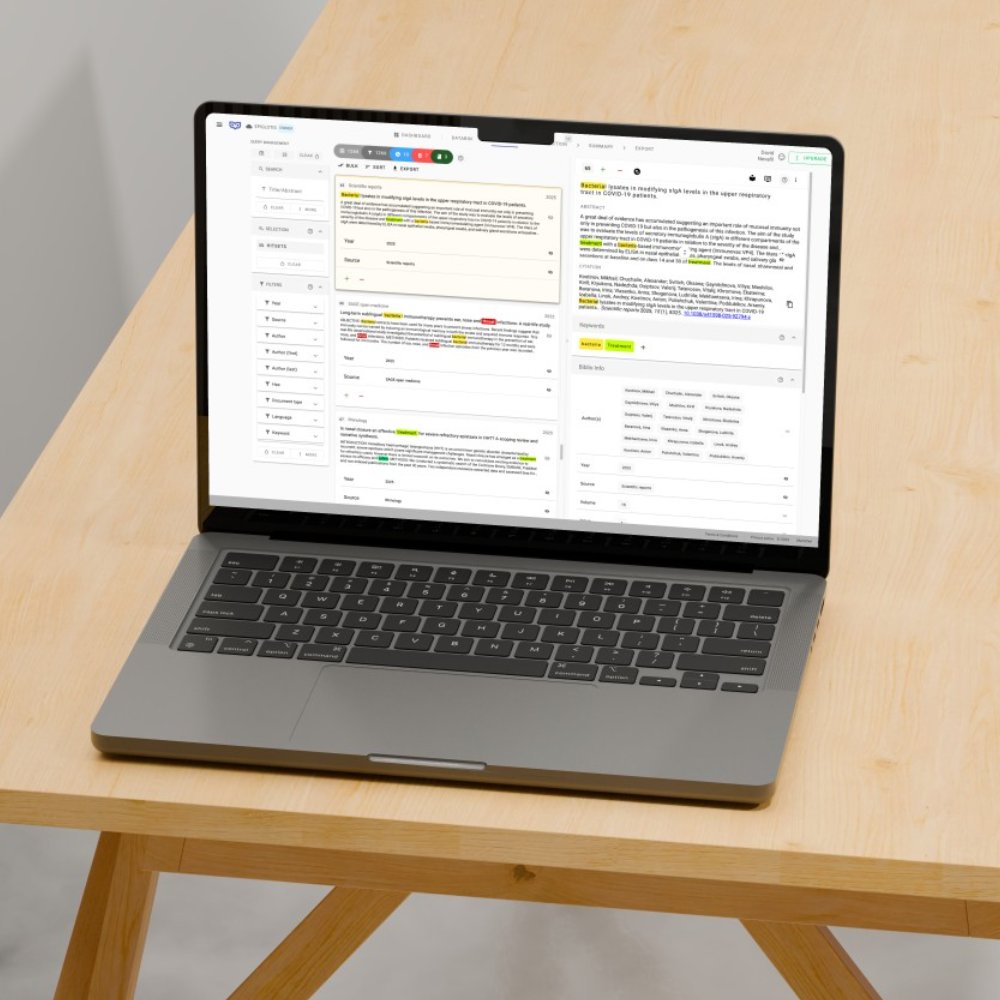
MemOwl is not designed to replace every other tool. It is designed to connect the gaps between them.
It is a versatile, highly capable literature review tool that prioritizes:
Sending such content to external AI services—knowingly or unknowingly—introduces legal, ethical, and institutional complications. Many universities and pharmaceutical companies simply cannot, under any policy, allow sensitive content to leave their infrastructure.
Because MemOwl is used for projects where confidentiality matters, we refuse to compromise on this principle. A tool designed for professionals must treat professional data with professional care.
Systematic and scoping reviews rest on transparent, reproducible processes.
Yet AI models, by design, rely on complex internal representations that cannot be fully inspected, justified, or replicated. This undermines:
By removing artificial constraints on volume and workflow structure, MemOwl helps reduce selection and risk bias, simply by making it feasible to work with larger, more representative sets of references.
It supports:
Importantly, it is developed by professionals who actively collaborate with librarians, scholars, and information specialists—the people who understand literature reviews not as a feature set, but as a process.
So, do we really need another tool for literature reviews?
Not another silo. But a tool that finally acknowledges how diverse, iterative, and demanding literature reviews actually are.
That is the space MemOwl was built for.
Don't hesitate to contact us if you have any questions.


